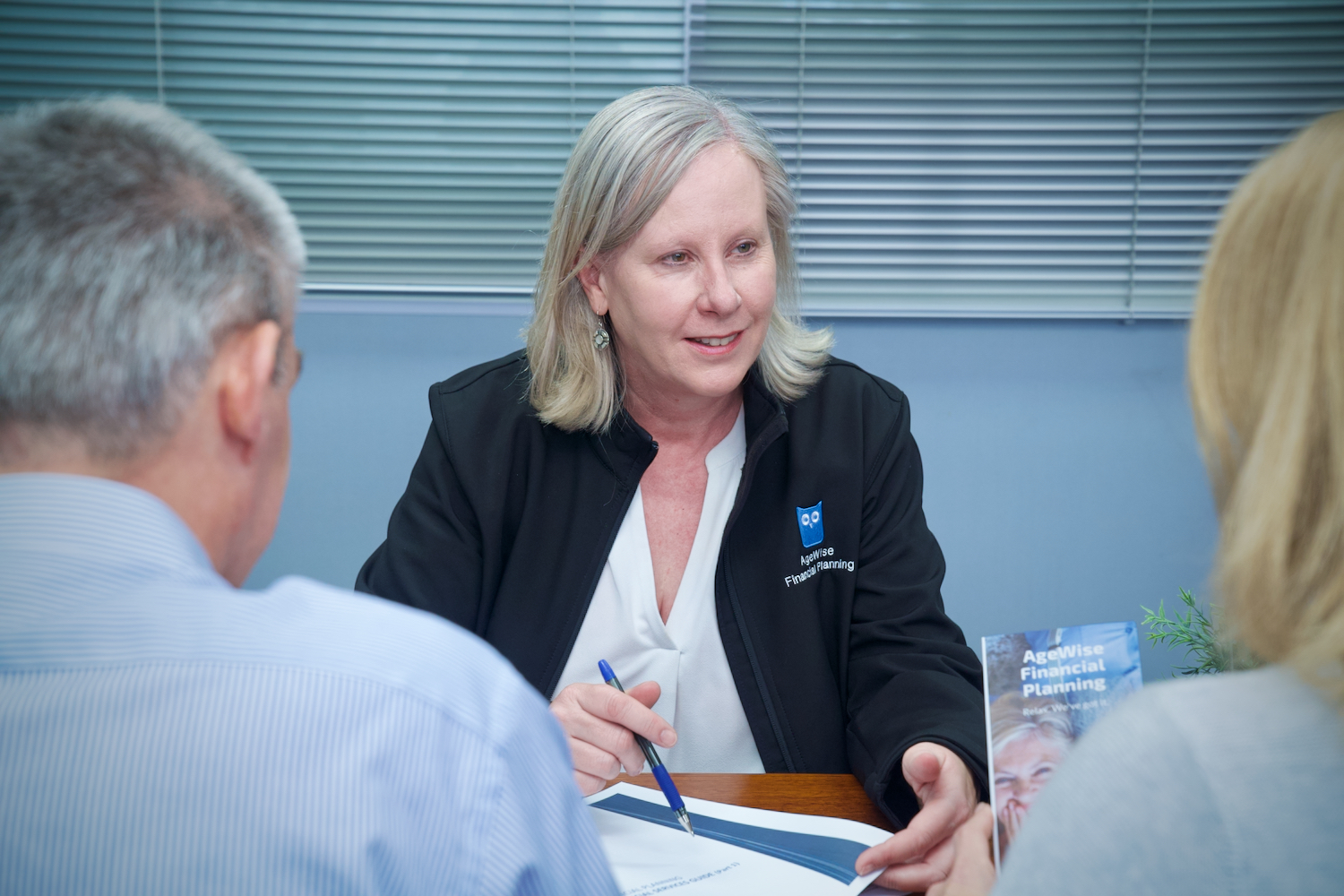
What types of clients do you typically work with?
Clients who are:
Many of our clients are seeking clarity around their financial future, peace of mind, and ongoing professional support.
When it comes to aged care transitions, we often work closely with adult children and Powers of Attorney to help manage the financial and administrative affairs of older family members.
What type of clients aren’t you suitable for?
We may not be the right fit if you:
If we’re not the right fit, we’re always happy to point you in the direction of someone who may be better suited to your needs.
Do you work with younger clients?
Not usually, unless they are helping an older friend or relative navigate retirement or aged care. Our core focus is on pre-retirement, retirement, retirement village and aged care advice.
For example, younger clients often require personal insurance advice, and this is not an area we specialise in.
What services do you offer?
We provide comprehensive financial advice tailored to your situation, including:
We offer both ongoing advice relationships and one-off advice engagements, depending on your needs.
Do you offer ongoing services?
Yes.
Some clients choose to work with us on an ongoing basis for regular reviews, strategy updates, and peace of mind.
We’ll recommend this for most clients where we have prepared and implemented detailed advice, including investment advice.
How much does financial advice cost?
This varies depending on the complexity of your situation and the scope of work required.
We provide a clear, upfront fee proposal after the initial consultation before any further work begins, so you know exactly what to expect. We do not proceed without your agreement. You can see the steps in our advice process and our fee range for each stage in our “How we work” page.
Our initial consultation fee is $750, or $950 if you need us to visit you. Most clients proceed with at least two stages, but there is no obligation to proceed beyond the initial consultation.
If you need or would like further assistance, the next stage would be either a Summary Report from $660, a Strategy Paper (including a second meeting) from $1,950 and/or a detailed Statement of Advice (including implementation assistance) from $5,500.
Once we understand your situation and your needs after the initial consultation, we will provide you with a fixed price quote for further assistance.
Do you charge for the initial consultation?
Yes.
Our initial consultation fee is $750 in our Greensborough office (which has stairs and no lift) or if you would like to meet via Zoom or by phone. If you would like us to visit you (within 15km), our consultation fee is $950.
This cost ensures that:
We find this leads to more productive and valuable first meetings for both you and us.
What happens in the initial consultation?
In your first meeting, we will:
There is no obligation to proceed beyond this meeting.
How do I book an appointment?
Booking an appointment is easy.
You can:
We’ll work with you to find a suitable time for your initial consultation.
Do you offer appointments outside the office or at home?
Yes, we can accommodate different meeting preferences, however, we limit our travel to a 15km radius from Greensborough.
Appointments are typically held in our Greensborough office, however we can also:
Please let us know your preference when booking.
Where are you located?
We are based in Greensborough in Melbourne’s north-east, and we work with clients both locally and more broadly via virtual meetings. There is a large car park immediately behind our office (opposite Woolworths).
Please note that our office has stairs and no lift.
Why should I choose AgeWise?
As a small business, we offer:
Our goal is to simplify complex decisions and give you confidence in your financial future.
Do you deal with Centrelink for me?
No.
We can help you to understand your Centrelink entitlements and means testing, direct you towards the right forms to use and also help you with specific questions on paperwork. However, we don’t take on the role of Centrelink nominee or deal directly with Centrelink for you.
If you do need this detailed help, we would refer you also to a lovely business called Pensioner Solutions that we often work very closely with.